
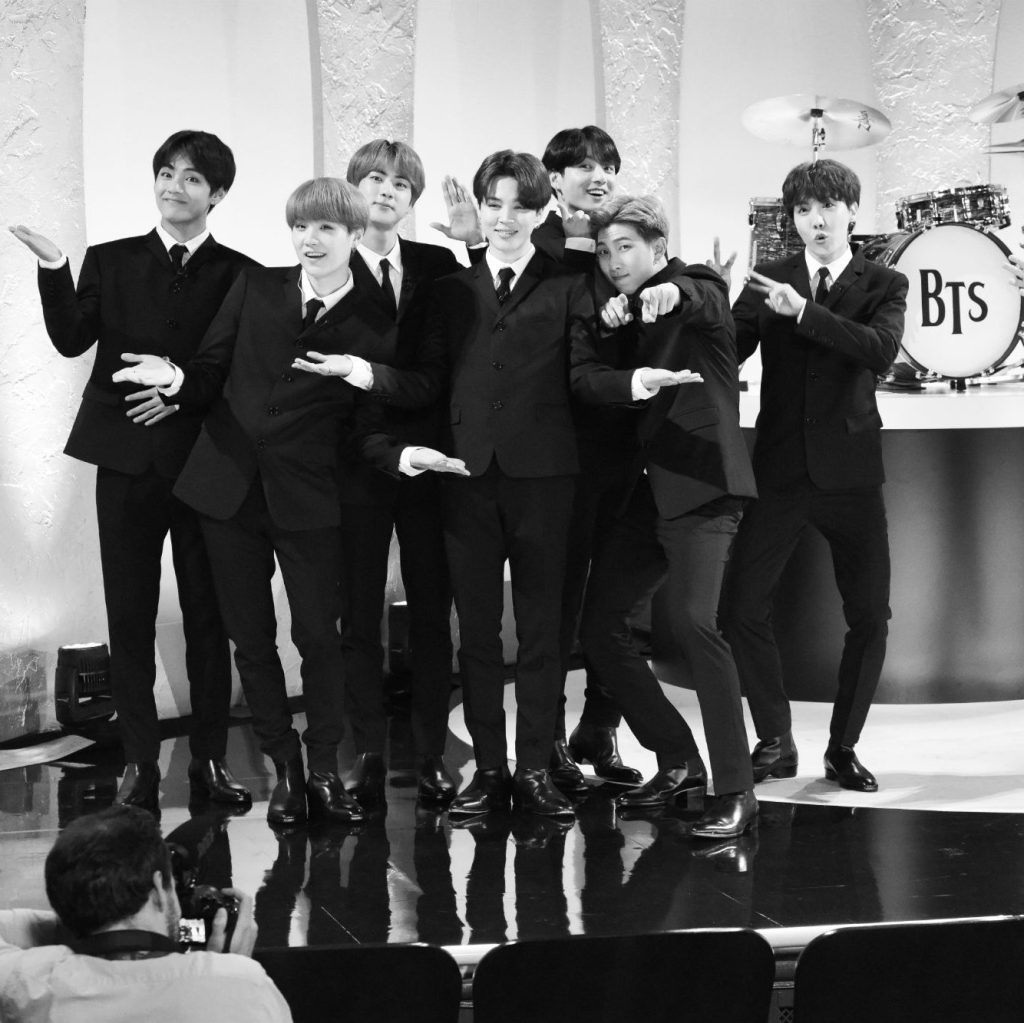
BTS’ Jin, Suga, J-Hope, RM, V, Jimin and Jungkook, originally a hip hop group, their musical style has evolved to include a wide range of genres. Their lyrics, often focused on personal and social commentary, touch on the themes of mental health, troubles of school-age youth, loss, the journey towards loving oneself, and individualism. Their work features references to literature and psychological concepts and includes an alternative universe storyline.
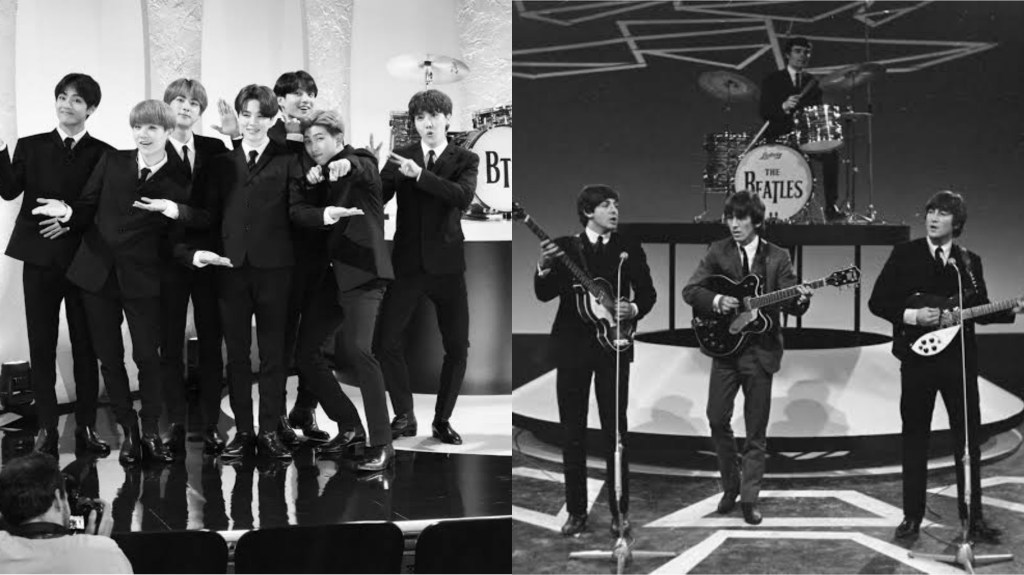
BTS have released several albums and performed on several world tours and now they have officially earned Five No. 1 Albums in just over two years six months. The last group to tally five No. 1s faster was The Beatles, who earned five No. 1s in just under two years and five months with “Yesterday” and “Today” (July 30, 1966) and “The White Album” (Dec. 28, 1968). BTS’ albums to reach no. 1 include; “Love Yourself: Tear,” “Love Yourself: Answer,” “Map of the Soul: Persona,” “Map of the Soul: 7,” and “BE”
When BTS first broke into the mainstream Western music scene, many skeptics labeled them a passing trend. But five No. 1 albums on the Billboard 200 chart in just over two years and six months is not something a trend accomplishes. It is an achievement that speaks to the sustained excellence, global resonance, and sheer work ethic of a group that refuses to be boxed in. BTS is not just a boy band from South Korea; they are an evolving cultural force that continues to rewrite the rules of global stardom.
The significance of five chart-topping albums in such a short time cannot be overstated. In a music industry where sustaining momentum is difficult, BTS has achieved what many Western artists spend decades trying to accomplish. These milestones include Love Yourself: Tear, Love Yourself: Answer, Map of the Soul: Persona, Map of the Soul: 7, and BE. Each of these albums debuted at No. 1 on the Billboard 200, not only marking BTS’s commercial success but also signaling a shift in the global music industry.
What sets BTS apart is their ability to remain authentic in an industry that often rewards formulas over innovation. Every one of their albums is a well thought out narrative journey. From themes of self love and identity to commentary on youth, fame, and mental health, BTS approaches music as a medium of reflection. Their lyrics are poignant, sometimes painfully honest, and delivered with a sincerity that speaks across language barriers.
Critics and industry insiders often cite BTS’s massive and dedicated fanbase, ARMY, as the reason behind these chart successes. While that is undoubtedly part of the equation, it is an oversimplification that fails to give the group due credit. Yes, BTS has one of the most engaged fan communities in the world, but that did not happen in a vacuum. Their connection with fans is not transactional. It is deeply emotional, cultivated over years of consistent communication, gratitude, and transparency. They have built a relationship with their audience that is built on respect and shared growth.
Moreover, BTS’s success is not limited to just one region. They have achieved what few artists have managed, a truly global fanbase. Whether it is Seoul, São Paulo, Paris, or Los Angeles, their concerts sell out, their merchandise flies off shelves, and their cultural impact is visible in the fashion, language, and behavior of their fans. This worldwide resonance is a direct result of their inclusive messaging and refusal to conform to narrow definitions of what pop music should sound like or represent.
Another important element of BTS’s run of No. 1 albums is their creative involvement. They are not puppets in the industry. They write, compose, and co produce most of their music, and they take part in the conceptualization of their albums, performances, and visuals. This level of artistry is rare in a world where many artists, especially those in groups, have little control over their creative direction. BTS has proven that artists can be both commercial and deeply involved in their own narratives.
Their influence extends beyond music charts. They have spoken at the United Nations, collaborated with global brands, and led campaigns promoting mental health and self expression. Their Love Myself campaign in partnership with UNICEF has raised millions to combat violence against children and teens. In these ways, BTS is not just dominating music. They are leveraging their platform to foster positive change, and that adds a layer of meaning to every chart milestone they achieve.
It is also worth noting the linguistic barriers they have overcome. Prior to BTS, no predominantly Korean language act had achieved this level of success in the United States and other English speaking countries. For decades, the music industry functioned as if English was the only viable language for global success. BTS shattered that misconception, proving that quality art transcends language. They have inspired a wave of appreciation for non English music and paved the way for other artists to break into global markets on their own terms.
Of course, every high achieving group faces criticism, and BTS is no exception. Some argue that the constant flow of content, albums, singles, performances, and social media, contributes to burnout and unhealthy pressure, both on the group and their fans. This is a valid concern. But BTS has been vocal about their own struggles with mental health, rest, and finding balance. They have taken hiatuses, both as a group and individually, acknowledging the importance of well being in the midst of overwhelming fame.
What remains clear, however, is that their five No. 1 albums are not simply numbers. They are cultural milestones. They represent the evolution of a group that has learned to thrive in an industry that was not built for them. They have redefined what it means to be a global artist in the twenty first century and challenged the dominance of Western pop culture by showing the world that talent, authenticity, and persistence know no borders.
As they enter the next phase of their careers, whether through solo projects, military service, or eventual group reunions, BTS’s impact is already cemented in history. The music industry is forever changed by their presence. And for fans who have walked this journey with them, every No. 1 album feels not like a victory over others, but a collective affirmation — proof that music made with heart will always find its audience.
In the end, five No. 1 albums in just over two years and six months is not a fluke. It is the result of relentless dedication, boundless creativity, and an unwavering belief in the power of music. BTS did not just earn those No. 1s. They earned respect, not only as musicians but as visionaries of a new global era. And if history is any indication, they are far from finished.

“Love Yourself: Tear” (LOVE YOURSELF 轉 ‘Tear’) was released on May 18, 2018. On May 27, 2018 “Love Yourself: Tear” debuted at number one on the US Billboard 200, earning 135,000 album-equivalent units.
The Album become BTS’ highest-charting album in a Western market at the time, as well as the first Korean album to top the US albums chart and the highest-charting album by an Asian act.

“Love Yourself: Answer” (LOVE YOURSELF 結 ‘Answer’) was released on August 24, 2018. “Love Yourself: Answer” debuted at number one on the US Billboard 200, becoming BTS’ second number-one album, their second of 2018, and their highest sales week in the country to date.
It earned 185,000 album-equivalent units, including 141,000 in pure album sales. It also became the first Korean album to ever receive an RIAA album certification.
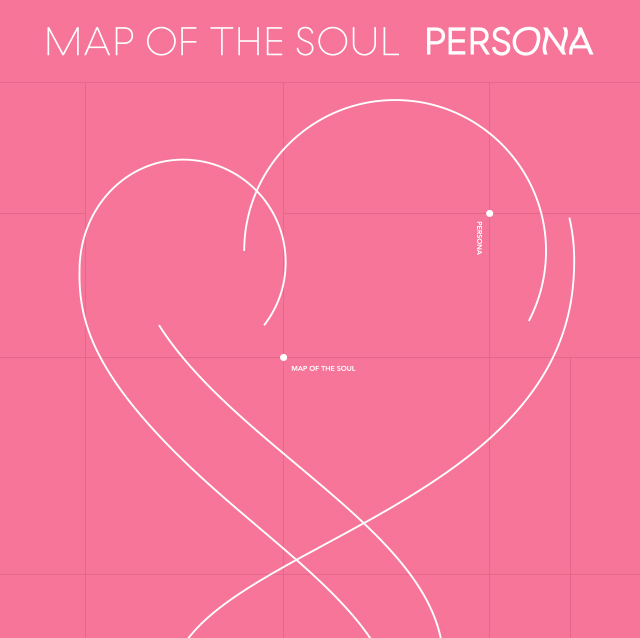
“Map of the Soul: Persona” was released on April 12, 2019. In the United States. “Map of the Soul: Persona” debuted at number one on the Billboard 200 with 230,000 album-equivalent units, including 196,000 pure album sales, becoming the band’s biggest week in terms of units.
It is BTS’ third number-one album in roughly 11 months, making them the first band to achieve three number-ones in a year since the Beatles in 1995 through 1996. BTS also became the band with the second-fastest accumulation of three number-one albums since the Billboard 200’s inception.
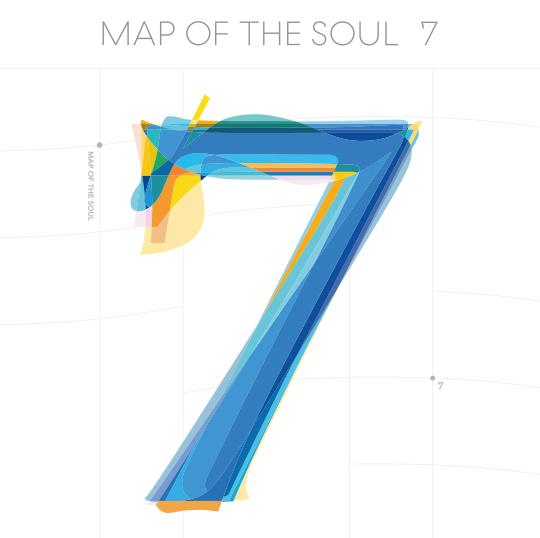
Map of the Soul: 7 was released on February 21, 2020. Map of the Soul: 7 debuted atop the US Billboard 200 with 422,000 album-equivalent units, including 347,000 pure album sales, becoming BTS’s fourth number-one album in the country and the highest first-week figures of BTS’s albums in the US to date. It also marked the biggest first week sales for an album in 2020 and maintained the record until The Weeknd’s After Hours was released on March 20.
The album outsold the next six highest-ranking albums on the Billboard 200 combined. The album’s lead single, “On” debuted at number four on the Billboard Hot 100 with 86,000 downloads and 18.3 million U.S. streams, marking BTS’ biggest sales week for a song at the time.
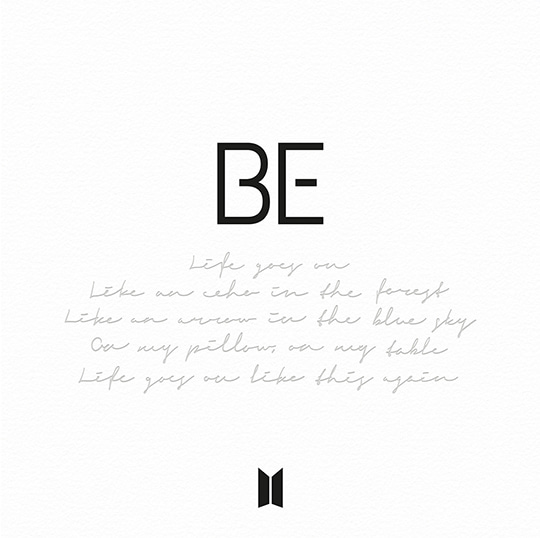
“BE” was released on November 20, 2020. “BE” debuted atop the US Billboard 200 with 242,000 album-equivalent units, including 177,000 sales, becoming BTS’s fifth number-one album in the United States. As a result, BTS became the fastest group to earn five number-one albums since the Beatles between 1966 and 1968. BTS also became the first group to have two chart-topping albums in the country in 2020, and the second act overall following YoungBoy Never Broke Again.
By doing so, BTS became the first group in eight years to have two number-one albums in the same calendar year since One Direction in 2012, and also the first act since Ed Sheeran in 2017. Be debuted atop South Korea’s Gaon Album Chart with first week sales of 2.274 million copies on Hanteo Chart, representing the second-highest first sales figures in the chart’s history, behind Map of the Soul: 7. With it, “BE” became BTS’ eighth consecutive million seller in the country.
Discover more from borahae bulletin
Subscribe to get the latest posts sent to your email.
 borahae bulletin