

Teaser. More info coming 18/12/20
There’s a rare kind of silence that falls when Jeon Jungkook enters a room, not one of intimidation, but of awe. At 23, the youngest member of BTS has long since outgrown the “maknae” label, stepping fully into his identity as an artist, a performer, and a man coming into his own. For DICON KOREA, Jungkook doesn’t just model clothes; he embodies stories. Each frame is layered with experience, each glance carrying a quiet intensity that commands attention without demanding it.
Born in Busan, South Korea, Jungkook’s journey is often told like a fairytale: a young boy auditioning for talent shows, a teenager being courted by multiple entertainment agencies, and ultimately choosing BigHit Entertainment because he believed in RM, BTS’ leader. But between the lines of this well-worn story lies something deeper, a relentless desire for growth. “I wasn’t perfect, and I’m still not,” he once said, “but I always want to be better.” This quiet fire has become his defining trait. Whether it’s dancing, singing, or producing, Jung Kook chases excellence not for the applause but for the satisfaction of giving his best.
His work ethic is legendary among those who know him. In the early days of BTS, it was not unusual to find Jungkook staying behind after rehearsals, practicing until his muscles burned. He watched videos of Chris Brown, Usher, and even martial arts routines, wanting to blend skillsets into something uniquely his. He never wanted to be just good, he wanted to be unforgettable.
And unforgettable he became.
From his solo debut with “Euphoria” to his record-breaking English single “Seven,” Jung Kook’s solo endeavors have only magnified the depth of his talent. The release of his debut album GOLDEN showcased a mature, genre-blending sound that gave listeners a glimpse into his world. With tracks ranging from energetic pop to sultry R&B, he explored vulnerability, desire, and the intricacies of love. Jung Kook didn’t just sing about emotions, he lived them, bled them into every lyric.
But perhaps what makes Jung Kook so magnetic isn’t just the strength of his vocals or the grace of his movements, it’s his sincerity. He is, at his core, unfiltered. He laughs with abandon during livestreams, tears up during concerts, and constantly speaks of his fans, ARMY, as the source of his strength. “ARMY always gives me a reason to work harder,” he says. “Even when I doubt myself, they believe in me.” That mutual love, built over a decade, is not just touching, it’s transformative.
In this DICON KOREA shoot, we see multiple shades of Jungkook. There’s the fierce model in a structured suit, looking straight into the camera as if daring it to look away. There’s the relaxed artist, barefoot in a studio, head tilted back in thought. And then there’s the boyish charm that peeks through, when he breaks into a grin, or when his hand instinctively reaches to push back that one stubborn strand of hair.
Fashion, for Jung Kook, is another form of storytelling. Whether he’s walking through an airport in a grunge-inspired ensemble or donning luxury brands onstage, there’s intentionality behind every choice. He gravitates toward clothing that feels authentic, that allows him to express what he can’t say aloud. “I like things that are comfortable but cool,” he’s mentioned. “Clothes that move with me, that feel like me.” That blend of softness and edge mirrors Jung Kook himself, gentle offstage, powerful on it.
Yet behind all the accolades, there’s still a part of Jung Kook that remains untouched by fame. In quiet interviews, he speaks of wanting simple things: peace, time to paint or play guitar, a house with a studio where he can just create. He talks about growth not as a race, but a slow unfolding. “I’m still figuring out who I am,” he said in a recent broadcast. “And maybe that’s okay.”
As the K-pop industry evolves, Jungkook stands as both a product of it and a disruptor. He respects its traditions, but he’s never been afraid to push boundaries. His tattoos, once considered controversial, are now celebrated for their artistry and honesty. His openness about mental health, self-doubt, and burnout has sparked vital conversations. He’s proof that idols can be vulnerable and still be strong.
Jung Kook’s relationship with his BTS brothers is another cornerstone of his story. He often calls them his “hyungs” with warmth, his voice softening when he speaks of how they guided him through his teenage years. To the world, he might be the golden maknae, but to BTS, he’s the youngest brother who grew into someone they admire. They’ve watched him blossom from the shy boy who joined the team at 15 to the confident man who now leads stadiums of fans with a single note.
Now, as he steps into a new era, both as a solo artist and still a part of BTS, there’s a sense of anticipation. Not just from fans, but from Jung Kook himself. He’s excited about what’s to come, but not in a rushed way. He’s more intentional now, more thoughtful. “I want to create things that feel real to me,” he says. “Not because people expect it, but because I love it.”
That’s what DICON captures so perfectly in this issue, not just Jung Kook the icon, but Jungkook the human. The one who still gets nervous before a performance, who finds comfort in late-night walks, who feels most like himself when he’s lost in music. It’s a portrait of an artist in bloom, petals still unfurling, reaching quietly for the sun.
In the end, Jungkook is not just golden because of his talent or looks. He is golden because he remains genuine in a world that often asks for masks. He’s still learning, still growing, still dreaming, and perhaps that’s his greatest power of all.
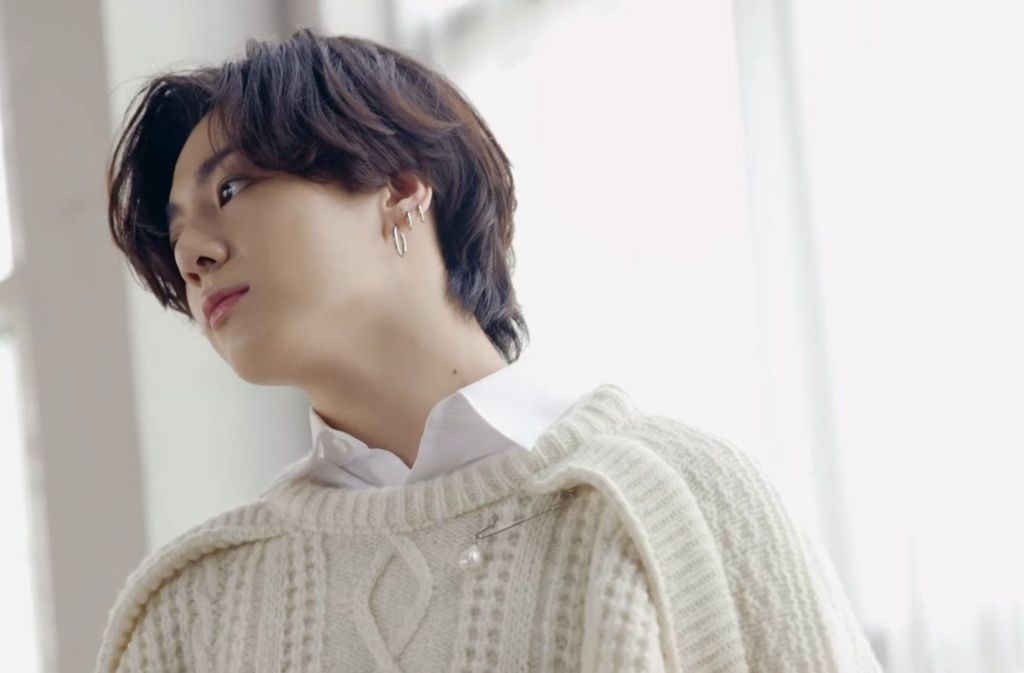
Watch full teaser
Discover more from borahae bulletin
Subscribe to get the latest posts sent to your email.
 borahae bulletin