
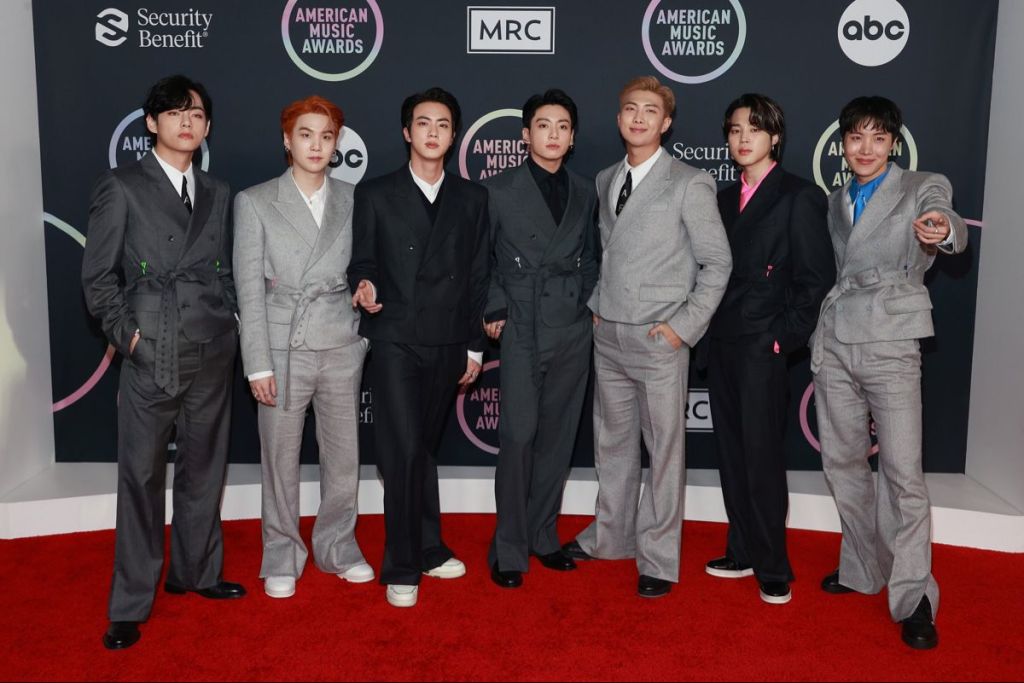
Claims about South Korea experiencing a nationwide paper supply shortage due to BTS album and merchandise sales have been circulating online, and while the phrasing might be ‘exaggerated’, the underlying point highlights something very real, the extraordinary industrial-scale impact of BTS’s popularity.
Over the years, BTS album production has operated at volumes rarely seen in the modern music industry. Physical albums often include photobooks, postcards, posters, lyric books, and collectible inserts, all of which require high-quality paper and specialized printing.
When multiple album versions, reprints, and global restocks are factored in, alongside merchandise packaging, the demand placed on printers and suppliers increases dramatically. During major K-pop releases, especially BTS-related ones, more specifically this comeback after nearly four years, this demand can temporarily strain printing schedules and material allocation across manufacturers.
ARMY’s purchasing behavior amplifies this effect. Fans frequently buy multiple copies per album as collectors’ items. When albums sell in the millions within weeks, suppliers must rapidly scale output, which can ripple through related industries such as paper sourcing, printing, and logistics.
While it may be inaccurate to say BTS alone has caused a literal nationwide paper shortage, the repeated sell-outs and massive production runs associated with their releases have undeniably pushed manufacturing demand to unusual levels. In that sense, the viral claim reflects a broader truth, BTS is not just a music act, but a global force capable of influencing entire supply chains.
That impact becomes even clearer when looking at the scale of ARMY’s engagement ahead of BTS’s upcoming Arirang era. Reports of over 4 million pre-ordered physical albums in one-week alone place Arirang in rare territory before release day, signaling massive print runs that require enormous amounts of paper, packaging, and logistics coordination.
At the same time, the album has already surpassed 3 million pre-saves on Spotify, showing that demand isn’t limited to collectors, digital consumption is lining up at historic levels as well. Few artists in the world generate this kind of simultaneous physical and digital momentum.
The sell-out of the new ARMY Bomb Light Stick Ver.4 only reinforces the pattern. Despite higher prices and limited stock, the light stick vanished within minutes, driven by fans preparing for the comeback and the upcoming world tour. Together, these numbers paint a clear picture, BTS releases don’t just perform well, they activate global supply chains.
From paper suppliers and printers to streaming platforms and merch manufacturers, every BTS era creates a surge that extends far beyond music charts. ARMY’s coordinated buying power turns anticipation into measurable economic impact, proving once again that BTS operates on a scale few acts, past or present, can realistically match.
Discover more from borahae bulletin
Subscribe to get the latest posts sent to your email.
 borahae bulletin